

 Facebook
 X
X
 Pinterest
 Copy Link
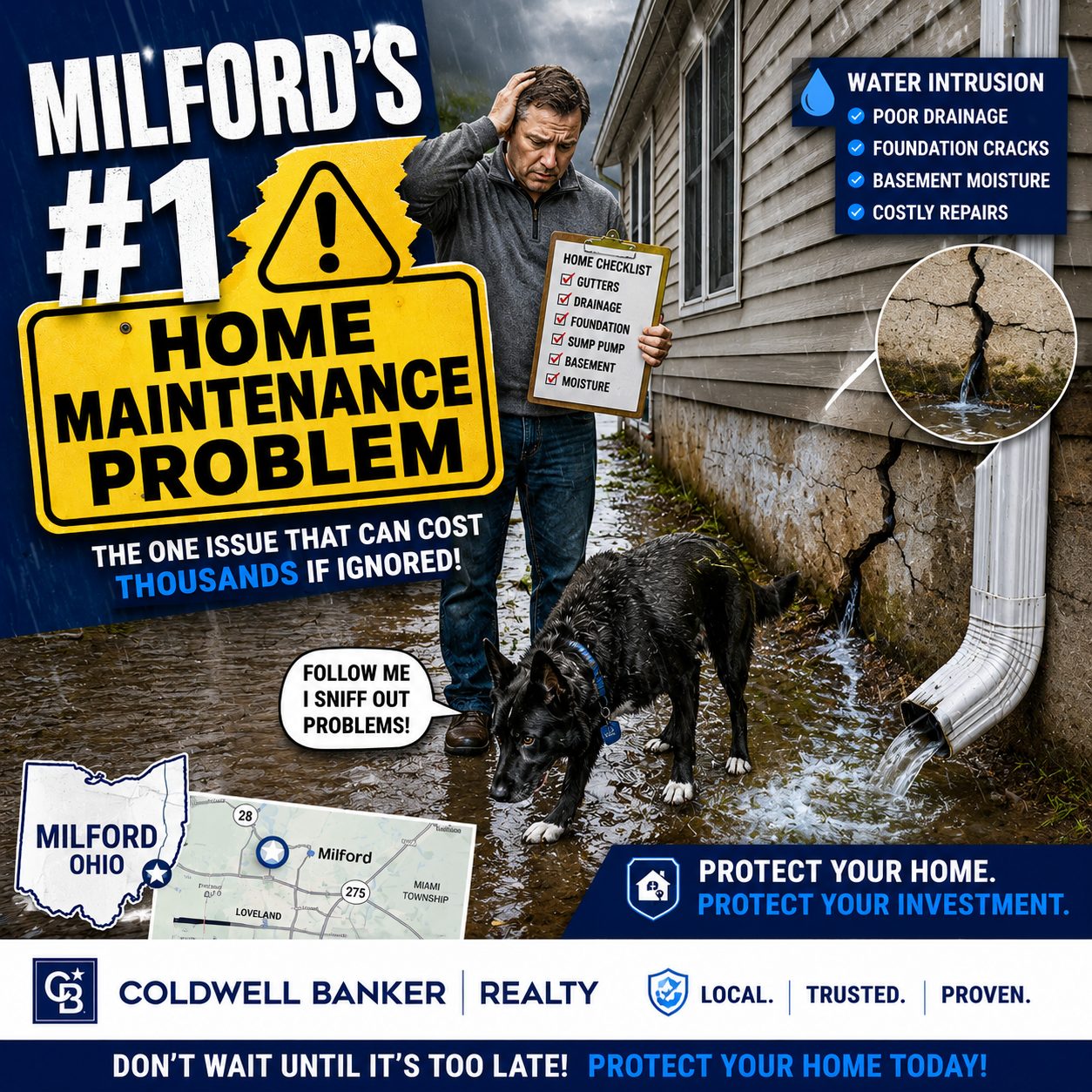
If you’ve owned a home in Milford for more than a year or two, there’s a good chance you’ve already run into this one. 🏠 Basement dampness and foundation drainage issues are, hands down, the most common maintenance issue Milford homeowners deal with—and it’s not because anyone did anything wrong. It’s because of where we live.
Milford sits close to the Little Miami River, and a lot of our neighborhoods were built on clay-heavy soil that doesn’t drain particularly fast. Add in homes built across several different decades—with several different generations of waterproofing standards—and you’ve got the perfect setup for water finding its way somewhere it shouldn’t.
This isn’t a doom-and-gloom post. It’s the opposite. Once you know what to look for, this is one of the easiest issues to manage before it becomes expensive.
Quick Answer
The most common maintenance issue in Milford homes is basement and foundation moisture, caused by the area’s clay soil, older home age, and proximity to the Little Miami River floodplain. Left unaddressed, it can lead to musty odors, cracked walls, or mold—but most cases are preventable with proper grading, gutters, and drainage maintenance, often for a few hundred dollars instead of a few thousand.
Why This Matters Right Now
Ohio’s freeze-thaw cycle is brutal on foundations. Every winter, moisture in the soil expands and contracts around your home’s foundation, and every spring thaw pushes that moisture somewhere—usually toward the path of least resistance, which is often your basement wall or window well. 💧
If you’re buying or selling in Milford right now, this matters even more. Buyers are asking sharper questions about basements than they were a few years ago, and sellers who get ahead of it avoid a renegotiation headache during inspection.
Key Trends & Data
A few things I see consistently working with Milford buyers and sellers:
- Homes built before the 1990s are more likely to have older clay tile drainage systems that have shifted or partially failed over time
- Properties near low-lying lots or close to the river see more seasonal moisture activity
- Newer construction with modern grading and sump systems tends to have far fewer issues, but isn’t immune
- Inspection reports in our market flag “moisture intrusion” or “efflorescence” (that white, chalky mineral buildup on basement walls) more often than almost any other category
None of this means a home is a bad buy. It means it’s something to plan for like any other system in the house.
Buyer & Seller Motivation Insights
Buyers want certainty. Nobody wants to move in and discover a wet basement during the first heavy rain. That’s why a clean inspection on this specific issue can actually become a selling point.
Sellers, meanwhile, are often surprised this comes up at all—especially if they’ve never had a problem. But “never had a problem” and “no risk of a problem” aren’t the same thing, and a savvy buyer’s inspector will be looking closely either way.
👉 Thinking about buying or selling in Milford and want to know what your specific situation looks like? Schedule a quick call and let’s talk through it.
Popular Features & Lifestyle Trends
More Milford buyers are prioritizing finished basements—extra living space, home gyms, media rooms—which makes basement dryness even more relevant than it used to be. A dry, usable basement adds real livable square footage. A damp one limits what you can do with that space.
Local Market Insights
Milford’s housing stock spans a wide range, from older homes near the historic downtown area to newer builds out toward Miami Township and Loveland. Each comes with its own version of this issue:
- Older homes near downtown Milford: more likely to have aging foundations and original drainage systems
- Newer subdivisions: generally better graded, but can still have problems if gutters or downspouts aren’t properly maintained
- Homes closer to the Little Miami River: higher seasonal moisture exposure, especially after heavy rain
This pattern shows up across Clermont County more broadly—not just Milford—so if you’re house hunting in Goshen, Batavia, or Union Township too, it’s worth keeping in mind.
Financial & Lending Considerations
Here’s the part most people don’t think about: moisture issues can affect financing. If an appraiser or inspector flags active water intrusion, some loan types (especially FHA) may require repairs before closing. That can delay a sale or require renegotiation.
The good news? Most fixes are inexpensive when caught early:
- Cleaning and redirecting gutters/downspouts: usually under $200
- Regrading soil away from the foundation: a few hundred dollars
- Sealing minor cracks: a few hundred dollars
- Full exterior waterproofing or French drain systems: this is where costs climb, sometimes into the thousands
Catching it early is the difference between a maintenance task and a major repair.
Actionable Tips
Here’s what I tell every homeowner, buyer, or seller I work with in Milford:
- Check your grading. Soil around your foundation should slope away from the house, not toward it.
- Clean your gutters twice a year. Clogged gutters dump water right next to your foundation.
- Extend your downspouts. They should release water at least 5–6 feet from the house.
- Walk your basement after a heavy rain. Look for new dampness, musty smells, or efflorescence.
- Don’t ignore small cracks. Hairline cracks are normal, but growing or active ones aren’t.
Pro REALTOR® Strategy
Here’s what most people miss: sellers who get a basement moisture assessment before listing almost always come out ahead. It costs a little upfront, but it means no surprises during the buyer’s inspection—and no last-minute price renegotiation. I’ve seen deals nearly fall apart over a $400 fix that could’ve been handled weeks earlier.
For buyers, don’t let a damp basement automatically scare you off. Ask for documentation, get a contractor estimate, and use that information in your negotiation. Sometimes it’s a deal-breaker. Often, it’s just a bargaining chip.
FAQ
Is a damp basement a deal-breaker when buying a home in Milford?
Not usually. Most moisture issues are manageable and inexpensive to fix when caught early. It becomes a bigger concern only if there’s evidence of long-term, unaddressed water damage or structural impact.
How do I know if my basement moisture is serious?
Minor dampness after heavy rain is common. Warning signs of a bigger issue include standing water, visible mold growth, bowing walls, or a persistent musty smell that doesn’t go away with ventilation.
Does homeowners insurance cover basement water damage?
It depends on the cause. Most standard policies don’t cover flooding or gradual seepage, but may cover sudden issues like a burst pipe. Always check your specific policy.
What’s the difference between waterproofing and a sump pump?
Waterproofing addresses how water gets in (sealing, grading, drainage). A sump pump manages water that’s already gotten in by pumping it out. Many homes benefit from both.
Should I get a basement inspection before listing my home?
It’s not required, but it can save you from surprises during the buyer’s inspection period and gives you negotiating leverage if anything needs disclosure.
How much does it cost to fix a leaky basement in Ohio?
Costs range widely—from under $200 for simple drainage fixes to several thousand for full exterior waterproofing. Most Milford homes fall on the lower end if addressed early.
Are older homes in Milford more likely to have foundation issues?
Generally, yes, simply due to age and the drainage standards in place when they were built. It doesn’t mean an older home is a bad investment—just one where this system deserves a closer look.
Conclusion
Basement moisture isn’t a red flag in Milford—it’s just part of homeownership in our area, and the homeowners who stay ahead of it rarely have a problem worth worrying about. Whether you’re maintaining your current home, prepping to sell, or evaluating a home to buy, this is one system worth paying attention to before it becomes a bigger (and pricier) issue.
If you’re curious what your home is worth in today’s market, or you want help finding a home in Clermont County without any surprises, I’m here to help. 📲
Helpful Resources
📅 Schedule a Consultation:
https://tinyurl.com/Schedulea30MinuteCall
🏡 Find Out What Your Home Is Worth:
https://tinyurl.com/2026HouseValue
🔍 Search Clermont County Homes:
https://tinyurl.com/ClermontCOHomesforSale
📰 Subscribe to the Blog:
https://mikesellscincyhomes.com/cincinnati-real-estate-blog-tips-news
