

 Facebook
 X
X
 Pinterest
 Copy Link
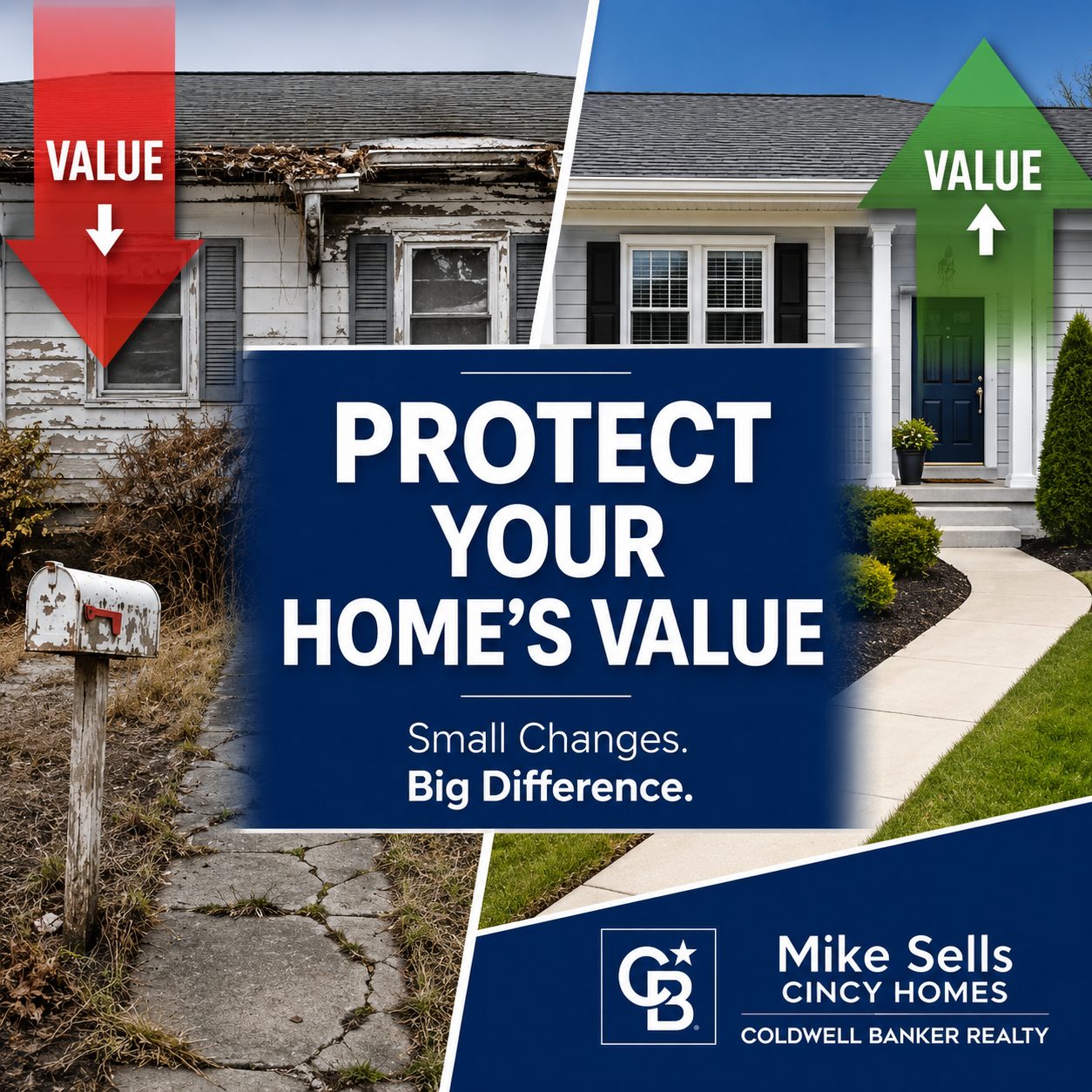
Quick Answer
Protecting your home’s value comes down to consistent maintenance, smart upgrades, and staying informed about your local market. Focus on curb appeal, address deferred maintenance before it becomes costly, choose renovations with strong ROI (kitchens, bathrooms, energy efficiency), and get a professional home value estimate annually. In competitive markets like Anderson Township, Milford, and Loveland, small proactive steps now protect your equity for years to come.
Your home is probably the biggest investment you’ve ever made. So why do so many homeowners treat it like a “set it and forget it” asset? 🏡
If you’re a homeowner in Cincinnati’s East Side or Clermont County, you’ve watched home values climb over the past few years. But here’s the thing nobody tells you at closing: rising values don’t protect themselves. Protecting your home’s value takes intention — a mix of maintenance, smart upgrades, and keeping a pulse on your local market.
Whether you’re planning to sell in the next year or the next decade, this guide breaks down exactly what matters and what doesn’t.
Why This Topic Matters Right Now
The Cincinnati and Clermont County housing market has seen real appreciation over the last several years, but market conditions shift. Interest rates move, buyer demand ebbs and flows, and inventory levels change month to month. That means the equity you’ve built isn’t guaranteed to stay put on autopilot.
Homeowners in Milford, Loveland, Anderson Township, Batavia, and Union Township are sitting on more equity than they may realize — but deferred maintenance, an outdated kitchen, or a neglected roof can quietly chip away at that number. Protecting your home’s value isn’t about panic. It’s about staying proactive instead of reactive.
Key Trends & Data
A few things are shaping home values across the region right now:
- Buyer expectations have risen. Move-in ready homes command stronger offers than homes needing obvious work.
- Energy efficiency matters more. Buyers are asking about HVAC age, insulation, and windows earlier in the process.
- Outdoor living space adds real appeal. Patios, decks, and usable yard space are consistently top requests from buyers touring homes in Anderson Township and Loveland.
- First impressions drive online engagement. Most buyers see your home’s photos before they ever see it in person — curb appeal now starts online.
Buyer & Seller Motivation Insights
Buyers today are cautious and detail-oriented. They’re comparing homes online before ever scheduling a showing, and they notice things sellers often overlook — worn carpet, dated light fixtures, a driveway that needs sealing. None of these are deal-breakers on their own, but they add up in a buyer’s mind and can translate into lower offers or longer negotiations.
For homeowners, this means the maintenance and upgrade decisions you make today directly shape how your home is perceived tomorrow — whether that’s next year or in ten years.
Popular Features & Lifestyle Trends
Across Clermont County and the East Side, certain home features consistently stand out to buyers:
- Updated kitchens with functional layouts
- Primary suites with updated bathrooms
- Finished basements or bonus living space
- Attached garages
- Fenced yards for pets and kids
- Proximity to parks, trails, and commuting routes
None of this means you need to renovate everything before you sell. It means understanding which upgrades actually move the needle — more on that below.
Local Market Insights
Communities like Milford, Loveland, and Anderson Township continue to attract buyers who want walkable downtown areas, access to the Little Miami Scenic Trail, and a mix of established and newer housing stock. Batavia and Union Township draw buyers looking for more land and value per square foot, while areas closer to Eastgate and Mount Washington appeal to commuters heading into downtown Cincinnati.
Understanding what buyers value in your specific area helps you prioritize the right improvements instead of guessing.
👉 Not sure what your home is worth in today’s market? Get a free home value report here.
Financial & Lending Considerations
Protecting your home’s value isn’t just about aesthetics — it’s about financial health too. A few things worth understanding:
- Mortgage rates affect buyer purchasing power. When rates shift, so does what buyers can comfortably afford, which impacts demand for homes in every price range.
- Home equity is a real financial asset. Many homeowners use it for renovations, debt consolidation, or funding a move-up purchase.
- Over-improving can backfire. Spending well beyond what comparable homes in your neighborhood support rarely returns dollar-for-dollar value.
According to the National Association of REALTORS®, staying informed about local housing market trends helps homeowners make smarter financial decisions about when and how to invest in their property.
Actionable Tips to Protect Your Home’s Value
Here’s where to focus your energy:
- Stay ahead of maintenance. Roof, HVAC, plumbing, and foundation issues only get more expensive with time.
- Refresh curb appeal. Mulch, paint, a clean walkway, and updated house numbers go a long way for minimal cost.
- Declutter and depersonalize regularly — even if you’re not selling soon, it keeps your home feeling well-kept.
- Choose ROI-friendly upgrades. Kitchens, bathrooms, and energy efficiency improvements tend to outperform highly personalized renovations.
- Keep records. Document upgrades, warranties, and maintenance — buyers and appraisers both respond well to a documented history.
- Get a professional value check-in annually, not just when you’re thinking about selling.
Pro REALTOR® Strategy
Here’s what most homeowners overlook: value protection is a habit, not a project. Homeowners who wait until they’re ready to sell to address maintenance and upgrades often end up rushing decisions, overspending on last-minute fixes, or leaving money on the table because they didn’t have time to do it right.
The homeowners who protect their equity best are the ones who treat their home like an ongoing investment — checking in on its condition and market position every year, not just every ten.
📅 Want a personalized strategy for your home? Schedule a free 30-minute consultation.
Frequently Asked Questions
What adds the most value to a home?
Kitchen and bathroom updates, curb appeal improvements, and energy-efficient upgrades (like HVAC and windows) tend to offer the strongest return relative to cost.
How often should I check my home’s value?
Once a year is a good rule of thumb, especially if you’re in a market with active appreciation like Clermont County or Cincinnati’s East Side.
Does landscaping really impact home value?
Yes — first impressions matter. Clean, well-maintained landscaping is one of the most cost-effective ways to boost perceived value.
Should I renovate before selling?
It depends on the renovation and your local market. Some upgrades pay off; others don’t recoup their cost. A local pricing strategy conversation can help you decide what’s worth it.
How do rising interest rates affect my home’s value?
Rate changes can shift buyer demand and purchasing power, which can influence how quickly homes sell and at what price point.
What hurts a home’s value the most?
Deferred maintenance, outdated systems (roof, HVAC), strong odors, and neglected curb appeal are common value killers.
Is now a good time to invest in home improvements?
It depends on your goals and timeline. A quick conversation about your specific home and neighborhood can help you prioritize the right projects.
Final Thoughts
Protecting your home’s value doesn’t require a massive renovation budget or constant stress. It requires consistency — staying on top of maintenance, making smart upgrade choices, and understanding what’s happening in your local market.
If you’re a homeowner in Milford, Loveland, Anderson Township, Batavia, or anywhere across Clermont County and want a clear picture of where your home stands today, I’m here to help.
Next steps:
