

 Facebook
 X
X
 Pinterest
 Copy Link
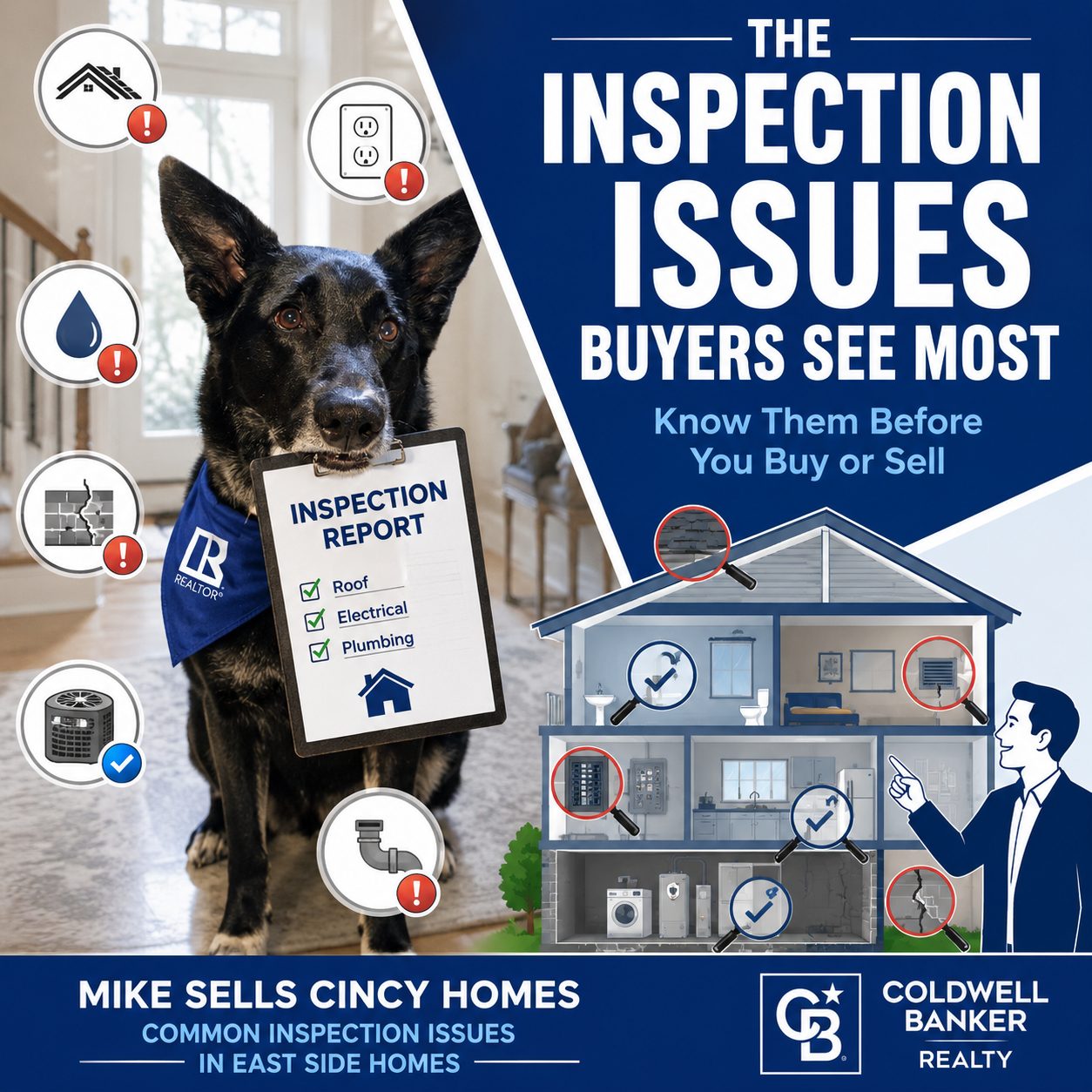
If you’re buying or selling a home in Milford, Loveland, Anderson Township, or Batavia, the inspection is the moment everything gets real. It’s where excitement meets fine print — and where deals either move forward smoothly or hit a wall.
I’ve sat through hundreds of these inspections across Clermont County and Cincinnati’s East Side, and the truth is: most issues aren’t deal-killers. But knowing what’s coming — before it shows up on a report — puts you in control instead of scrambling to react.
⚡ Quick Answer
The most common home inspection issues in East Side Cincinnati homes involve aging roofs, outdated electrical panels, foundation settling (especially in homes built on clay-heavy soil), plumbing from older construction eras, and radon levels above the EPA action threshold. Most of these are manageable with the right pricing strategy or repair negotiation — few are true deal-breakers when handled correctly.
Why This Topic Matters Right Now
Housing inventory across Clermont County has been loosening up, and mortgage rates are still sitting in the mid-6% range — meaning today’s buyers are more selective and less willing to absorb surprise repair costs after closing. At the same time, sellers with older homes in areas like Anderson Township, Terrace Park, and Mount Washington are competing against newer construction in Goshen and Union Township.
That combination raises the stakes on inspections. Buyers want confidence before they commit. Sellers want to avoid a mid-contract renegotiation that tanks their net proceeds. Either way, understanding common inspection issues before they show up on paper is one of the smartest moves you can make.
Key Trends & Data
Here’s what shows up most often on inspection reports for homes across the East Side and Clermont County corridor:
- Aging roofing systems — many homes in Milford and Loveland were built in the 80s and 90s, putting original or first-replacement roofs near the end of their lifespan
- Electrical panel issues — older panels (Federal Pacific, some Zinsco brands) that no longer meet current safety expectations
- Radon levels — Ohio sits in an EPA radon Zone 1 area, and Clermont County homes frequently test above the 4.0 pCi/L action level
- Foundation and grading concerns — clay soil common across Batavia, Pierce Township, and New Richmond can cause settling or drainage issues over time
- Plumbing material age — galvanized or older polybutylene piping still shows up in homes from certain build eras
None of these numbers should scare you off a home. They’re simply part of buying anything with history — and homes with character in this market almost always come with some.
Buyer & Seller Motivation Insights
Buyers walking into an inspection are usually thinking one of two things: “Is this house going to bleed money?” or “Can I use this to negotiate?” Both are fair. The report gives leverage, but panic over minor items can blow up a good deal over something a $200 repair would fix.
Sellers, meanwhile, are often blindsided by items they didn’t know existed — because they’ve lived in the home for years and stopped noticing the quirks. A pre-listing inspection removes that surprise entirely and lets you control the narrative instead of reacting to it during someone else’s timeline.
👉 Thinking about listing this year and want to know what an inspector might flag before it becomes a problem? Schedule a quick call and let’s walk through your home’s specific risk points.
Popular Features & Lifestyle Trends
Buyers touring East Side homes are increasingly asking about system age and maintenance history upfront — HVAC replacement dates, roof age, water heater type. It’s become a normal part of the showing conversation, not just something reserved for the inspection period.
Homes that come with documentation — receipts, warranty info, service records — tend to move through the inspection phase with far fewer surprises and far less friction at the negotiating table.
Local Market Insights
Across Milford, Loveland, and Anderson Township, home ages vary widely — you’ll find everything from 1970s ranches to newer builds near Eastgate and Union Township. That mix means inspection findings vary block to block, even within the same neighborhood.
Homes near commuting corridors like SR-32 and I-275 tend to see faster showing activity, which means sellers in those areas have less time to address issues reactively — pre-listing prep matters even more.
Financial & Lending Considerations
Inspection issues can directly affect financing, especially with FHA and VA loans, which have stricter property condition standards than conventional loans. A failed electrical panel or active water intrusion can stall — or kill — a loan approval if it’s not addressed.
With rates hovering in the mid-6% range, buyers are budgeting tightly. An unexpected $8,000 roof replacement post-inspection can be the difference between a deal closing and a buyer walking. Knowing your financing type — and what condition standards apply — should shape how you handle repair requests from day one.
Actionable Tips
For Buyers:
- Hire a licensed, local inspector — not whoever’s cheapest or fastest
- Always test for radon separately if it’s not automatically bundled
- Ask for service records on HVAC, water heater, and roof before waiving contingencies
- Don’t let minor cosmetic items derail negotiations on an otherwise solid home
For Sellers:
- Get a pre-listing inspection so nothing catches you off guard
- Fix cheap, high-impact items (GFCI outlets, minor leaks, handrails) before listing
- Keep maintenance receipts organized and ready to hand over
- Price with known issues factored in rather than hoping they go unnoticed
Pro REALTOR® Strategy
Here’s what most sellers miss: a $300 pre-listing inspection can save you thousands in last-minute negotiating leverage. When a buyer’s inspector finds something first, they control the conversation. When you find it first, you control the price, the timeline, and whether you fix it yourself or price around it.
I build this into every seller strategy session — because the goal isn’t just “get an offer.” It’s getting to closing without a mid-contract fire drill.
Frequently Asked Questions
What are the most common home inspection issues in Cincinnati’s East Side?
Roof age, electrical panel condition, radon levels, foundation settling, and plumbing material age come up most frequently across Milford, Loveland, and Anderson Township homes.
Do I have to fix every issue found in a home inspection in Ohio?
No. Ohio doesn’t require sellers to fix inspection items — repairs are negotiated between buyer and seller as part of the contract.
How much does a home inspection cost in Cincinnati?
Typical costs run a few hundred dollars, with radon testing and specialty inspections (well, septic, sewer scope) priced separately depending on the property.
Should sellers get a pre-listing inspection?
It’s one of the highest-value moves a seller can make — it removes surprises and gives you control over pricing and repair decisions before a buyer’s inspector finds something first.
Is radon testing necessary in Clermont County?
Ohio is an EPA-designated high-radon zone, and testing is strongly recommended for homes throughout Clermont County, including Batavia, Amelia, and Pierce Township.
Can a buyer back out of a contract because of inspection issues?
Yes, depending on contract terms — most Ohio purchase agreements include an inspection contingency allowing buyers to renegotiate or exit within a set window.
What inspection issues are deal breakers vs. minor fixes?
Structural, electrical safety, and active water intrusion issues tend to carry more weight than cosmetic items — but most issues are negotiable rather than automatic deal-killers.
Final Thoughts
Inspection issues aren’t something to fear — they’re something to plan for. Whether you’re buying your first home in Loveland or getting ready to list in Anderson Township, knowing what’s likely to come up (and how to handle it) puts you ahead of nearly everyone else in the transaction.
📞 Ready to talk strategy — buying or selling?
