

 Facebook
 X
X
 Pinterest
 Copy Link
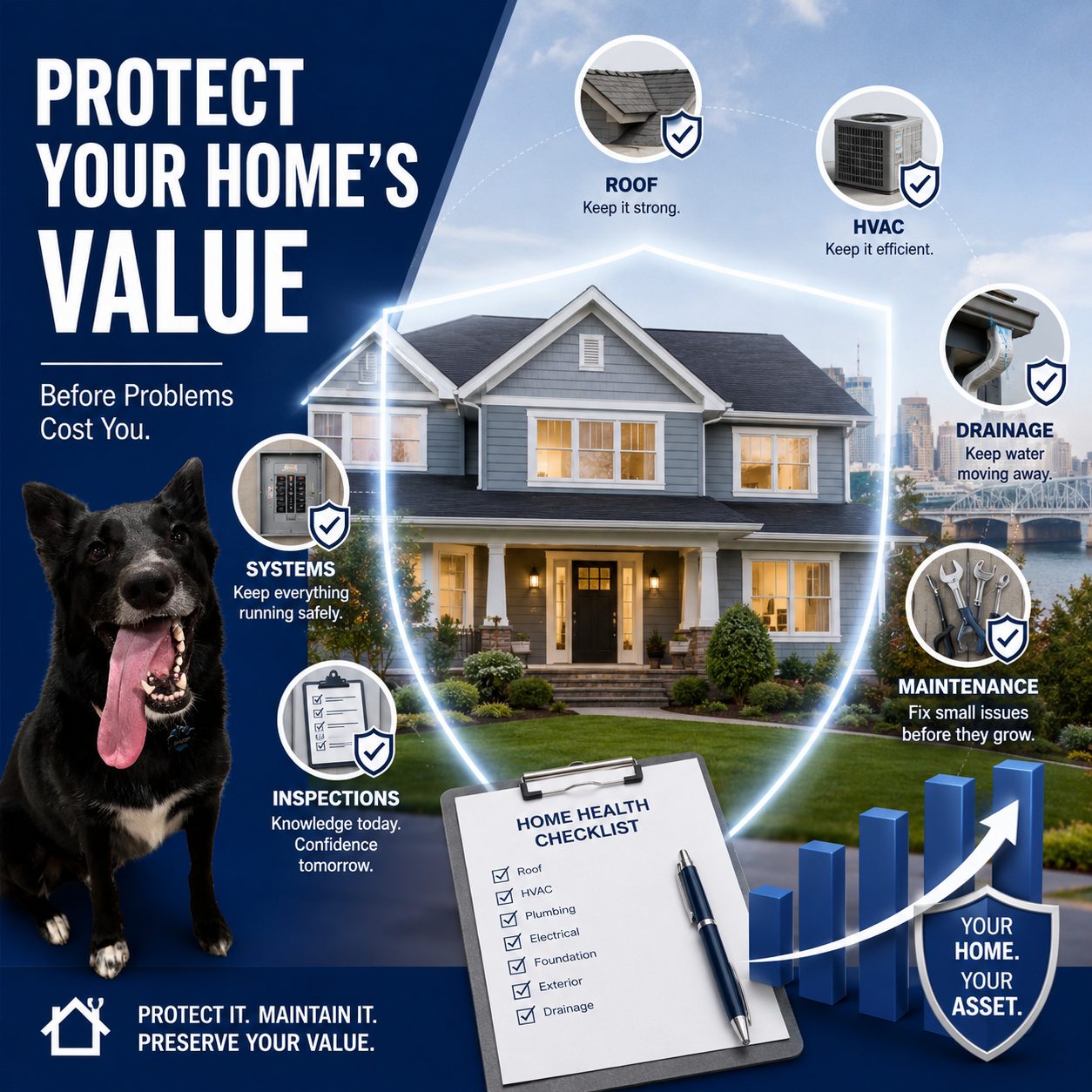
Your house is probably the biggest asset you own — but here’s the thing nobody tells you: home value isn’t something that just happens to you. It’s something you actively manage, or you don’t. 🏡
If you want to protect your home’s value, the good news is that most of the work isn’t expensive or complicated. It’s consistent. Small, smart decisions made over years add up to real equity — and neglect adds up just as fast in the wrong direction.
Whether you’re planning to sell next year or you’re just not sure what you should be doing to maintain what you’ve built, this guide breaks down exactly what matters.
Quick Answer
To protect your home’s value, focus on consistent maintenance (roof, HVAC, plumbing), strategic updates (kitchens, bathrooms, curb appeal), and staying aware of your local market conditions. Address small issues before they become expensive ones, keep documentation of upgrades, and get a professional home valuation every year or two so you’re never caught off guard by how your equity is actually trending.
Why This Matters Right Now
Housing market conditions shift, and buyers today are more selective than they were a few years ago. Homes that show pride of ownership sell faster and for more — homes that look neglected sit on the market and get picked apart during inspections.
That gap has grown wider. Buyers walking through homes in Milford, Loveland, and Anderson Township aren’t just looking at square footage anymore. They’re checking roofs, asking about furnace age, and comparing move-in-ready homes against ones that need work — and pricing their offers accordingly.
Protecting your home’s value isn’t just about a future sale, either. It affects your ability to refinance, borrow against equity, and pass on a valuable asset. It’s foundational to your financial picture, not a side project.
Key Trends Homeowners Should Know
A few patterns show up consistently across the Cincinnati-area housing market:
- Move-in-ready homes command a premium. Buyers will pay more to avoid a to-do list.
- Deferred maintenance shows up in inspections. What you skip now often surfaces later — with a price tag attached.
- Energy efficiency matters more. Updated HVAC systems, insulation, and windows are increasingly part of buyer conversations.
- Curb appeal drives first impressions. Online listing photos and drive-bys happen before a buyer ever steps inside.
None of this means you need to renovate constantly. It means small, ongoing attention beats big reactive projects.
What Buyers and Sellers Are Actually Thinking
Sellers often assume value protection means major renovations — a new kitchen, a finished basement, a bathroom overhaul. In reality, most value loss comes from things that were never fixed: a leaky roof left too long, a cracked driveway, an aging water heater nobody replaced.
Buyers, meanwhile, are calculating risk. Every visible flaw makes them wonder what they can’t see. That mental math directly affects the offers you receive and how firm buyers are willing to be on price.
Understanding both sides helps you prioritize correctly — fix what buyers will notice and worry about, not just what’s cosmetically outdated.
Popular Features & Lifestyle Trends
Certain updates consistently resonate with today’s buyers:
- Updated kitchens with functional layouts (not necessarily luxury finishes)
- Primary suites with updated bathrooms
- Flexible spaces — home offices, bonus rooms, finished lower levels
- Outdoor living areas, patios, and usable yard space
- Attached garages and ample storage
These preferences show up across price points, from starter homes in Amelia to larger properties in Anderson Township. The common thread is functionality — buyers want spaces that work for how they actually live.
Local Market Insights: Cincinnati & Clermont County
Communities across the East Side — Milford, Loveland, Batavia, Union Township, Pierce Township, and Goshen — each have their own pace and buyer profile, but the fundamentals of value protection apply everywhere.
Homes near commuting routes into Cincinnati, close to parks and green space, or within walking distance of downtown Milford or Loveland’s Nisbet Park tend to hold strong buyer interest. Housing stock varies widely — from ranch homes in established neighborhoods to newer construction in Union Township — so what “protecting value” looks like can differ depending on your home’s age and style.
Want a clearer picture of where your home stands right now? Find out what your home is worth — it takes a few minutes and gives you real, local numbers instead of a generic online estimate.
Financial & Lending Considerations
Home value isn’t just about a future sale price — it directly affects your financial flexibility.
- Equity access. Higher home value means more borrowing power for renovations, education, or other goals.
- Mortgage rate environment. Financing costs affect buyer purchasing power, which in turn affects what buyers can pay for your home.
- Insurance and taxes. Deferred maintenance (especially roofs and major systems) can affect insurability and premiums.
- Appraisal outcomes. Well-maintained, documented homes tend to appraise more smoothly than homes with unclear maintenance histories.
Keeping receipts, warranties, and records of major work isn’t just paperwork — it’s evidence that supports your home’s value when it matters most.
Actionable Tips to Protect Your Home’s Value
Here’s where the “smart friend over coffee” advice comes in — practical, no-fluff steps you can start this month:
- Get on a maintenance schedule. Roof inspections, HVAC servicing, gutter cleaning — set reminders so these don’t slip.
- Address small repairs immediately. A minor leak today is water damage in two years.
- Keep curb appeal current. Fresh mulch, trimmed landscaping, a clean exterior — cheap and high-impact.
- Document everything. Save receipts and warranties for major systems and renovations.
- Update strategically, not reactively. Kitchens and bathrooms offer the strongest return — prioritize those over cosmetic-only projects.
- Know your numbers. Get a professional home value check annually so you’re never guessing.
- Watch your neighborhood, not just your house. Nearby sales, new construction, and market activity all affect your value.
Pro REALTOR® Strategy
Here’s what most homeowners overlook: online home value estimates (Zestimates and similar tools) are frequently wrong — sometimes by tens of thousands of dollars — because they can’t see your actual condition, updates, or local market nuance.
The homeowners who protect their equity best are the ones who get a real, human evaluation periodically — not just when they’re ready to sell, but as an ongoing check-in. It catches problems early and keeps expectations grounded in reality instead of an algorithm’s guess.
Curious where you actually stand? Schedule a quick consultation and get real answers instead of a computer-generated guess.
Frequently Asked Questions
What decreases home value the fastest?
Deferred maintenance — especially roof damage, foundation issues, and outdated major systems — tends to hurt value the most because it signals ongoing risk to buyers and appraisers.
How often should I do home maintenance to protect value?
Seasonal check-ins are ideal: HVAC servicing twice a year, gutter cleaning in spring and fall, and a full home inspection-style walkthrough annually.
Does curb appeal really affect home value?
Yes. First impressions shape buyer expectations before they even walk inside, and strong curb appeal has been shown to influence both interest and offer strength.
What renovations add the most value?
Kitchen and bathroom updates typically offer the strongest return, followed by curb appeal improvements and functional upgrades like added storage or flexible living space.
How do I know what my home is actually worth?
Online estimates are a starting point, not a final answer. A local, professional evaluation accounts for condition, recent upgrades, and current market activity in your specific neighborhood.
Should I renovate before selling, or just maintain?
It depends on your timeline and goals — sometimes strategic updates make sense, other times solid maintenance and the right pricing strategy get you further. This is worth a conversation before you spend a dollar.
How does the local housing market affect my home’s value?
Your value is tied to nearby sales, buyer demand, and inventory levels in your specific area — which is why hyperlocal data matters more than national headlines.
Final Thoughts
Protecting your home’s value isn’t about one big project — it’s about consistent attention over time. Stay ahead of maintenance, make strategic updates, keep good records, and check in on your numbers regularly instead of guessing.
If you’re ready to get real answers about where your home stands, I’m here to help.
📞 Ready for the next step?
