

 Facebook
 X
X
 Pinterest
 Copy Link
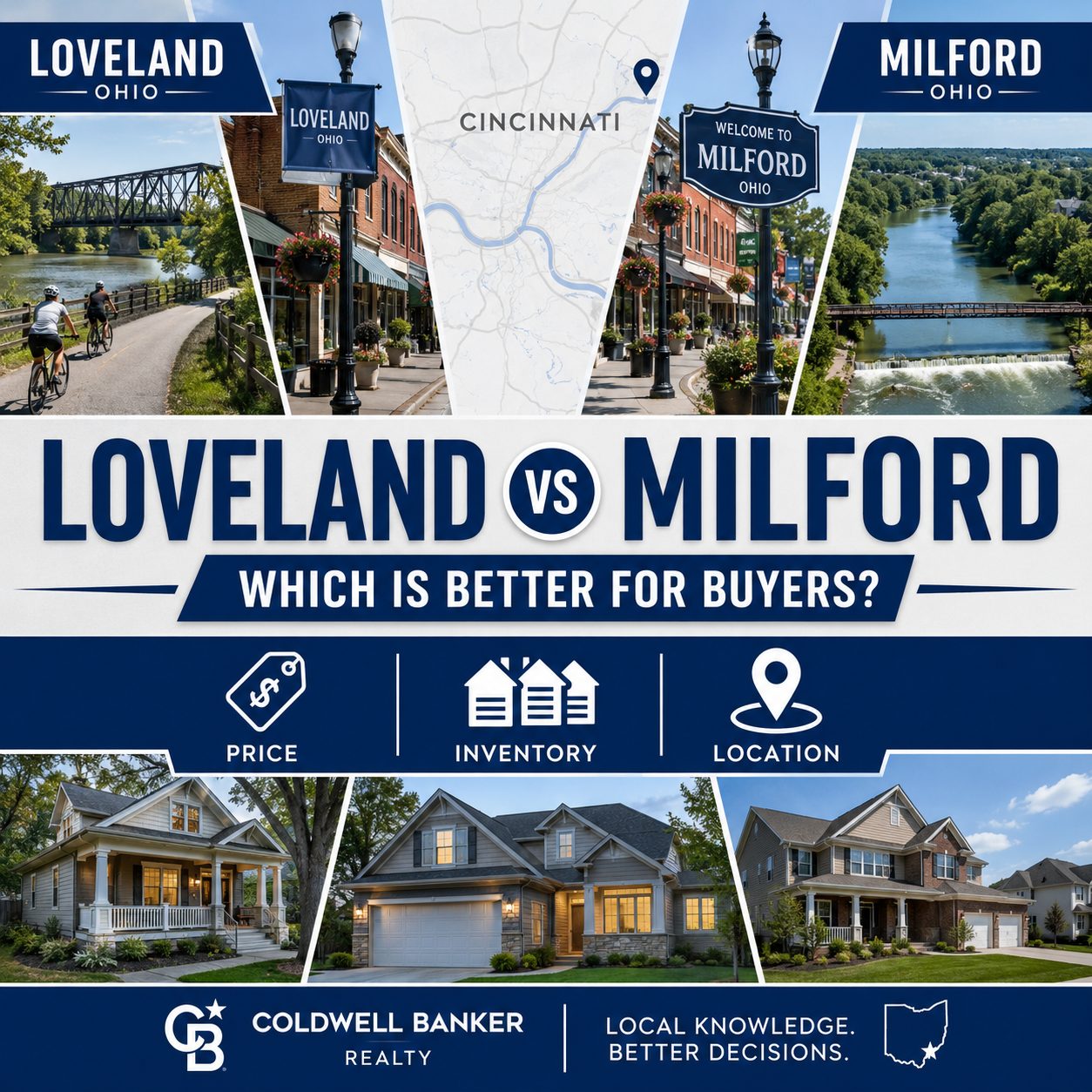
Loveland and Milford both sit along the Little Miami River in Cincinnati’s East Side, but they serve different buyer priorities. Loveland offers a walkable historic downtown, trail access, and a small-town feel with generally higher price points. Milford offers more affordability, faster commute access via 275 and 50, and a broader mix of housing styles — from starter homes to new construction. The “better” choice depends on your budget, commute, and lifestyle priorities.
If you’ve been comparing homes for sale in Loveland and Milford and can’t quite decide which one fits, you’re not alone. These two Ohio cities sit just minutes apart along the Little Miami River, and on paper, they can look pretty similar — good schools, river access, easy commute into Cincinnati. But once you actually spend time in each one, the differences start to show up fast, and they matter more than most buyers expect going in.
I work both of these markets constantly, and I get some version of this question almost every week: Loveland or Milford — which one should I buy in? So let’s break it down honestly, city by city, so you can figure out which one actually fits your life.
Why This Comparison Matters Right Now
The Cincinnati housing market has stayed competitive through 2026, and East Side communities like Loveland and Milford continue to see steady buyer demand. Inventory has loosened up slightly compared to the tightest years, which means buyers finally have a bit more room to be selective — and that’s exactly why this comparison matters right now. When you have options, you can afford to be intentional about which town actually matches how you want to live, not just which one has a house available.
Mortgage rates have also settled into a more predictable range, which means monthly payment differences between these two markets can meaningfully affect what you can afford. A $30,000–$50,000 difference in median home price, which is roughly what separates parts of Loveland from parts of Milford, translates directly into your monthly budget.
Key Trends & Data
Here’s what I’m seeing on the ground in both markets:
- Loveland tends to run higher on price per square foot, largely driven by its historic downtown corridor and the demand for homes within walking distance of Loveland’s shops, restaurants, and the bike trail.
- Milford offers a wider price range, from smaller starter homes near downtown to larger newer-construction homes in the surrounding township areas.
- Both markets have seen homes move quickly when priced right, but Loveland listings in the downtown core often generate more competing offers due to limited inventory.
- Milford has more room for new construction and recent builds, which appeals to buyers who want a move-in-ready home without the character quirks of an older property.
What Buyers Are Actually Thinking
When I sit down with buyers comparing these two towns, the conversation usually comes down to a few core questions: Do I want walkability or space? Do I want historic charm or a newer build? Am I commuting daily, and if so, where to?
Buyers drawn to Loveland are usually chasing a specific feel — they want to be able to walk to coffee, bike the trail on weekends, and live somewhere with visible community identity. Buyers leaning toward Milford are often more focused on value, square footage, and flexibility, with a willingness to drive a few extra minutes for the right house at the right price.
Neither instinct is wrong. It just depends on what you’re optimizing for.
Popular Features & Lifestyle Trends
Loveland buyers frequently prioritize:
- Proximity to the Little Miami Scenic Trail
- Walkability to downtown restaurants and shops
- Older homes with architectural character
- River-adjacent lots and views
Milford buyers frequently prioritize:
- More square footage for the price
- Larger lots and yard space
- Newer construction or updated systems
- Easy highway access via Route 50 and I-275
Both towns offer parks, river access, and a strong sense of community — the difference is really in density and pace. Loveland leans more compact and pedestrian-focused; Milford spreads out more and leans slightly more suburban outside its own downtown core.
📍 Ready to see what’s actually available right now? Search current Clermont County listings here and compare real options in both markets side by side.
Local Market Insights
Both cities benefit from being part of the broader Clermont County and East Side Cincinnati corridor, which continues to attract buyers priced out of closer-in Cincinnati neighborhoods without wanting to sacrifice commute time. Loveland’s downtown has seen consistent investment in recent years, with new restaurants and small businesses adding to its draw. Milford’s downtown area along the river has followed a similar trajectory, with revitalization efforts making it more of a destination than it was a decade ago.
Commute-wise, both towns give reasonable access to I-275, but Milford’s layout tends to offer more direct routes for buyers commuting toward the eastern suburbs or Northern Kentucky, while Loveland works well for buyers headed toward Blue Ash, Mason, or the I-71 corridor.
Financial & Lending Considerations
Price gaps between these two markets can shift what loan products make the most sense for you. If you’re working with a smaller down payment, Milford’s broader inventory of homes at lower price points may open up more conventional and FHA loan options without pushing you into jumbo territory. Loveland buyers, particularly those targeting the downtown core, should budget for higher competition and potentially higher earnest money to strengthen an offer.
Either way, getting pre-approved before you start touring homes in either market is non-negotiable right now. Well-priced homes in both towns can move within days, and a pre-approval letter is often the difference between getting a showing scheduled quickly and missing out entirely.
Actionable Tips for Buyers
- Define your non-negotiable first. Walkability or square footage — pick one, then let it guide your search area.
- Drive both towns at different times of day. Traffic patterns and noise levels shift depending on when you visit.
- Check commute times from actual listings, not just the town center. A 10-minute difference on paper can be 25 minutes in real traffic.
- Get pre-approved before touring. Both markets move fast on well-priced homes.
- Don’t assume one town is “better” — assume one town fits you better.
Pro REALTOR® Strategy
Here’s what most buyers overlook: the line between Loveland and Milford isn’t just a city limit — it’s often a few streets, and pricing can shift noticeably block by block depending on school district assignment, lot size, and proximity to the trail or downtown core. I’ve had buyers assume they were priced out of Loveland entirely, only to find a comparable home a few streets over in a slightly different pocket that fit their budget.
My advice: don’t filter your search by city name alone. Filter by the features and commute that actually matter to you, and let me help you find where those overlap with your budget — because sometimes that overlap is in a spot you haven’t even considered yet.
📞 Not sure which side of the line makes sense for your budget? Schedule a quick call with me and I’ll walk you through exactly what fits.
Frequently Asked Questions
Is Loveland or Milford more expensive?
Loveland generally runs higher on price per square foot, particularly in and around its downtown core, while Milford offers a broader range of price points across a wider variety of home styles.
Which town has a shorter commute to downtown Cincinnati?
Both towns offer reasonable access via I-275, though your actual commute time depends heavily on your specific neighborhood and destination within Cincinnati.
Are there new construction homes in Loveland or Milford?
Milford tends to have more new construction and recently built homes available, while Loveland’s housing stock skews older with more historic character.
Is Loveland or Milford better for families?
Both towns offer parks, recreational amenities, and access to the Little Miami Scenic Trail. The right fit depends on your specific priorities around home size, walkability, and commute.
How’s the walkability in each town?
Loveland’s downtown core is highly walkable, with shops, restaurants, and trail access close together. Milford’s downtown has become more walkable in recent years, though its surrounding areas are more spread out.
Do Loveland and Milford have similar property taxes?
Property taxes vary by specific township, school district, and levies in place, so it’s worth reviewing the specific parcel details for any home you’re considering in either town.
Which market moves faster for buyers right now?
Both markets can move quickly on well-priced homes, though Loveland’s downtown core tends to see slightly more competition due to limited inventory.
Final Thoughts
There’s no universal right answer between Loveland and Milford — there’s only the right answer for you. If walkability, trail access, and small-town charm are what you’re after, Loveland is likely calling your name. If you want more space, more affordability, and a bit more flexibility in home style, Milford probably makes more sense.
The good news? You don’t have to figure this out alone.
📲 Ready to find your fit? Schedule a free consultation, find out what your current home is worth, or search homes for sale across Clermont County right now. And if you want more local market insight like this, subscribe to the blog so you never miss an update.
