

 Facebook
 X
X
 Pinterest
 Copy Link
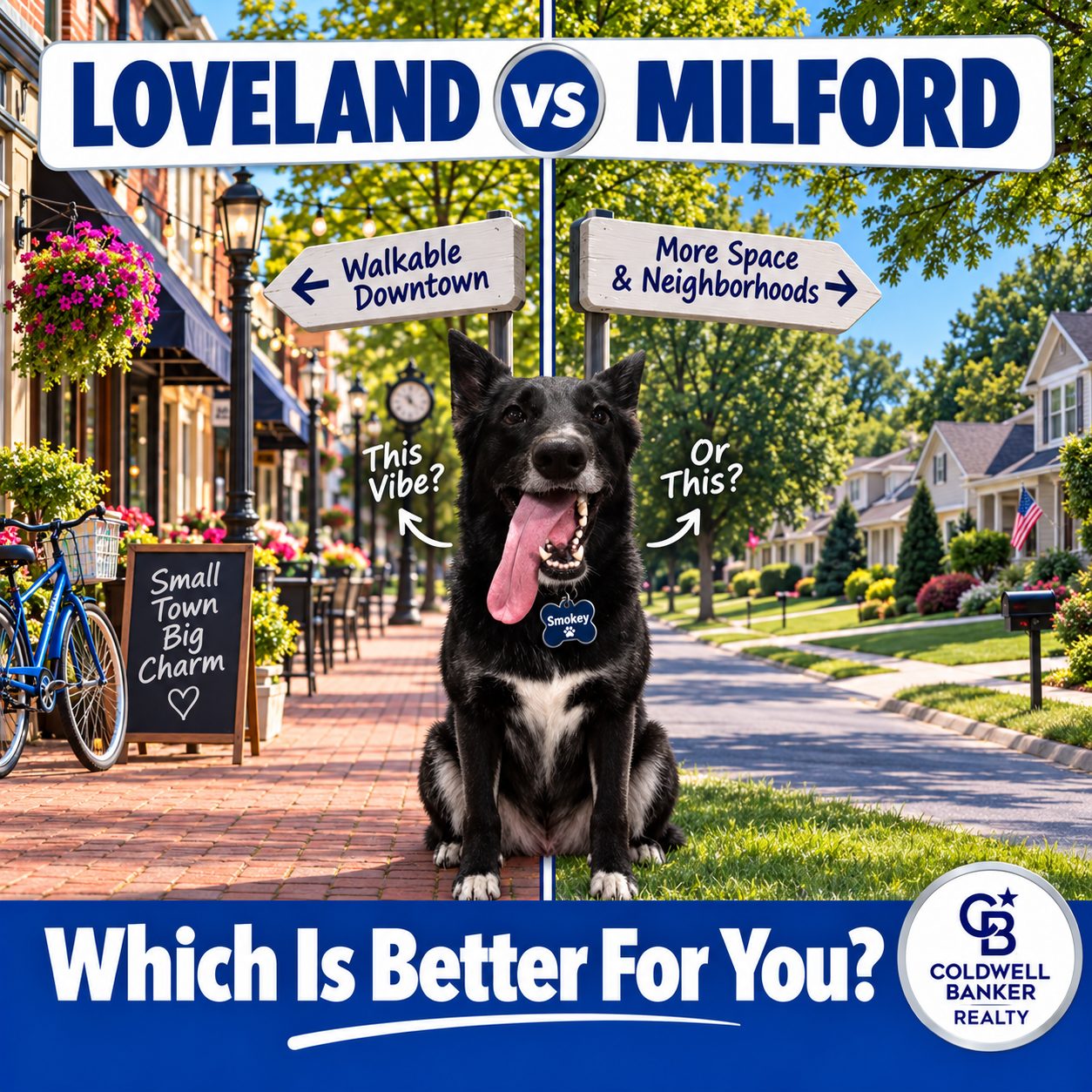
If you’re weighing Loveland vs Milford as your next home base on Cincinnati’s East Side, you’re not alone — it’s one of the questions buyers ask me the most. 🏡 Both towns sit along the Little Miami River, both feed into the same general commuter routes, and both have loyal residents who’ll tell you their town is the better pick. The truth is more useful than a verdict: the right answer depends on what you actually want out of daily life, not just square footage and price per foot.
I work both markets every week as an East Side REALTOR®, so this isn’t a guess from a spreadsheet — it’s what I see in showings, offers, and closings.
Quick Answer
Loveland tends to appeal to buyers who want a walkable downtown, bike-trail access, and a distinct small-town feel, often at a slightly higher price point. Milford typically offers more variety in home styles and price ranges, a shorter commute for some East Side routes, and a broader mix of starter and move-up inventory. Neither is “better” — it comes down to lifestyle priorities, budget, and commute.
Why This Comparison Matters Right Now
The Cincinnati East Side housing market has stayed active through 2026, and buyers relocating from other parts of Cincinnati — or from out of state — are increasingly cross-shopping Loveland and Milford in the same search. That’s smart. Both towns sit in the same general commute radius to downtown Cincinnati, both have access to I-275, and both are anchored by the Little Miami Scenic Trail.
But “similar” doesn’t mean identical. Inventory levels, price bands, and home styles shift between the two, and those differences matter more than people expect once they’re actually comparing listings side by side.
Key Trends & Data: How Loveland and Milford Stack Up
Here’s the general shape of what I’m seeing in both markets this year:
- Inventory mix: Milford tends to run a wider spread of price points, from smaller starter homes to larger newer builds, while Loveland’s inventory skews toward established neighborhoods with a tighter range of home styles.
- Days on market: Well-priced homes in both towns are still moving briskly when they’re staged and priced correctly — overpricing is a far more common reason a home sits than which side of the river it’s on.
- New construction: Milford and the surrounding Union Township/Miami Township corridor have more active new-build activity right now than Loveland’s more built-out core.
- Buyer competition: Both markets see multiple-offer situations on well-priced, move-in-ready homes, especially in the more walkable pockets of each town.
If you want the exact numbers for the price range you’re targeting, that’s where a real conversation does more good than a general statistic — schedule a quick call and I’ll pull current data for your specific search.
What’s Actually Driving Buyers to Each Town
Buyers choosing Loveland usually mention the same handful of things: the historic downtown, the bike trail running right through town, local shops and restaurants within walking distance, and a strong sense of community identity.
Buyers choosing Milford tend to prioritize different things: more flexibility on price and home size, easier access to shopping corridors along Route 28 and Route 50, and broader inventory that spans everything from cozy ranches to newer two-story builds.
Neither motivation is “right” — they’re just different priorities, and that’s exactly why this comparison matters before you start touring homes.
Popular Features & Lifestyle Trends
Across both towns, I’m seeing consistent buyer interest in:
- Move-in-ready kitchens (updated counters, cabinets, appliances)
- Flexible bonus spaces for a home office or gym
- Outdoor living space — patios, decks, usable yards
- Attached garages and mudroom/drop-zone storage
- Proximity to the Little Miami Scenic Trail for walking, running, or biking
Loveland’s housing stock leans toward older, character-filled homes closer to downtown, with newer construction further out. Milford has a broader blend of eras and styles, part of why it tends to have more entry points for first-time buyers.
Local Market Insights: Loveland vs Milford Logistics
A few practical, on-the-ground differences worth knowing:
- Commute routes: Both towns connect to I-275, but which exit and which direction you’re commuting matters more than the town name — map your actual commute before deciding.
- Downtown/walkability: Loveland’s downtown is more concentrated and walkable; Milford’s commercial areas are more spread along the main corridors, meaning more driving between errands.
- Recreation: Both towns give direct access to the Little Miami Scenic Trail and river access points, so outdoor access is close to a wash between them.
- Shopping: Milford has more big-box and grocery variety close by; Loveland leans more toward local boutique shops and dining downtown.
I keep this evaluation strictly to logistics, amenities, and property features — that’s the information that actually helps you make a good decision.
👉 Curious what’s actually available right now? See current Loveland listings here or browse Milford homes here — both update live.
Financial & Lending Considerations
Your budget will do a lot of the deciding for you, so it’s worth getting real about the numbers early:
- Get preapproved before you tour. Your loan program (conventional, FHA, VA) and current mortgage rates shape what’s realistic in either town, and preapproval tells you your true price ceiling before you fall for a house you can’t finance.
- Factor in property taxes. Rates vary by specific taxing district even within the same town, so ask for the actual number on any home you’re serious about.
- Budget for the whole picture. Insurance, utilities, and any HOA dues (more common in newer Milford-area developments) all affect your real monthly payment, not just principal and interest.
For a plain-English breakdown of financing options before you start touring, my Home Buyer Guide walks through preapproval, down payment options, and what lenders actually look at.
Actionable Tips If You’re Deciding Between the Two
- Drive your actual commute at the time of day you’d really be doing it — a map estimate and rush-hour reality are two different things.
- Walk both downtowns on a weekend to feel the difference in pace and amenities firsthand.
- Pull current inventory in both towns for your specific price range — the “better” town often depends entirely on what’s listed that month.
- Talk to a lender first, not last, so your search is grounded in real numbers from day one.
- Don’t rule either town out based on reputation alone — tour a few homes in each before you decide.
Pro REALTOR® Strategy: What Most Buyers Overlook
Here’s what most buyers miss: they pick a town first, then get frustrated when inventory in that town doesn’t match their budget or timeline. I flip that order with my clients. We start with your must-haves and your real number from the lender, then look at where that criteria actually shows up on the map — sometimes that’s Loveland, sometimes it’s Milford, and sometimes it’s a neighboring East Side community you hadn’t considered yet.
That approach also means you’re never locked out of new listings the moment they hit — I send serious buyers new matches as they come on, often before they’re trending on the big portals.
Frequently Asked Questions
Is Loveland or Milford better for commuting to downtown Cincinnati?
Both connect to I-275, so commute time depends more on your specific work location and route than on which town you choose — check your actual drive before deciding.
What’s the price difference between homes in Loveland and Milford?
Price ranges overlap significantly in both towns, but Milford generally offers a wider spread of entry-level options, while Loveland’s closer-to-downtown inventory tends to run at a premium.
Does Loveland or Milford have more new construction?
Milford and the surrounding Miami Township/Union Township corridor currently have more active new-build activity than Loveland’s more established core.
Which town is more walkable?
Loveland’s downtown is more compact and walkable; Milford’s amenities are more spread out along its main commercial corridors.
Is Milford or Loveland better for first-time buyers?
Milford’s broader inventory mix often gives first-time buyers more entry points, but the right fit depends on your specific budget and must-haves — that’s worth a real conversation, not a guess.
Do both towns have access to the Little Miami Scenic Trail?
Yes — both Loveland and Milford connect directly to the trail, so outdoor access is comparable between them.
Should I choose based on schools?
I keep school information factual and logistical rather than ranking or endorsing specific districts — I’d encourage you to research current district boundaries and visit in person as part of your decision.
Bottom Line
Loveland vs Milford isn’t a competition with one winner — it’s a question of which lifestyle, commute, and price point fits you best. Both towns give East Side buyers strong options, and the right one usually becomes obvious once you’ve toured a few homes, mapped your commute, and talked numbers with a lender.
Ready to see what’s actually available in both towns right now? Here’s how I can help:
📞 Schedule a free 30-minute consultation and let’s map out your search
🏠 Find out what your current home is worth if you’re buying and selling at the same time
🔍 Search Clermont County homes for sale — or go straight to Loveland or Milford listings
📬 Subscribe to the blog for weekly East Side market updates
Sources: National Association of REALTORS® | Freddie Mac
