

 Facebook
 X
 Pinterest
 Copy Link
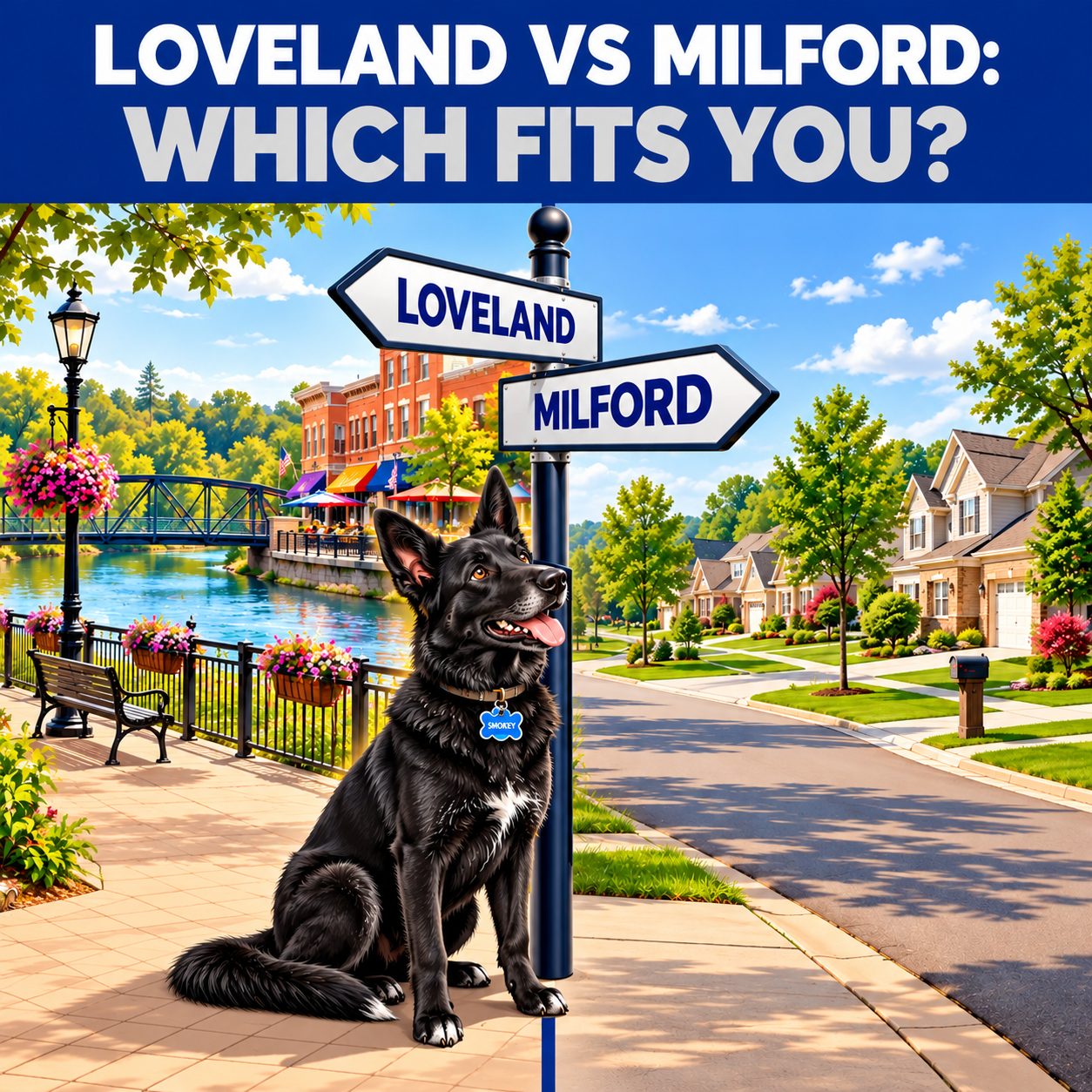
If you’re weighing Loveland vs Milford for your next home purchase, you’re not alone. These two East Side Cincinnati suburbs sit less than 15 minutes apart, pull from the same general buyer pool, and both show up constantly in home searches for Clermont and Hamilton County buyers. But they’re not interchangeable. Pricing, home styles, commute routes, and day-to-day lifestyle all shift once you cross from one town into the other, and picking the wrong one for your budget or routine can cost you months of searching. 🏡
Let’s break down what actually separates these two communities, so you can make a confident, informed decision instead of guessing.
Quick Answer: Loveland vs Milford for Buyers
Loveland tends to run slightly higher on price and leans into a walkable, historic downtown with river access and trail connectivity, while Milford offers a wider mix of price points, more new construction nearby, and a shorter commute into parts of the East Side. Neither town is “better” across the board — the right call depends on your budget, commute, and the kind of day-to-day lifestyle you want.
Why This Comparison Matters Right Now
Buyers are being more selective in 2026 than they were a few years ago. Mortgage rates are still a bigger factor in monthly payment math than list price alone, and with inventory tighter in some price bands than others, picking the right suburb from the start saves you from losing time on homes that don’t fit.
Loveland and Milford both sit inside the stretch of Cincinnati’s East Side that’s drawn steady buyer interest for years, alongside Anderson Township, Batavia, and the broader Clermont County market. That popularity means homes in both towns can move quickly when they’re priced well, so narrowing down which town fits you first puts you in a better position to act when the right listing hits.
Key Trends & Data: How Loveland and Milford Compare
Here’s a side-by-side look at what tends to separate the two markets:
- Home styles: Loveland has more historic and character homes near its downtown core, plus newer builds further out; Milford has a broader spread of ranch, split-level, and newer-construction homes.
- Price range: Loveland generally trends a bit higher per square foot, especially near downtown and the Little Miami River; Milford typically offers more inventory in the moderate price range, including areas like Day Heights.
- Commute: Milford’s location along Route 50 and closer proximity to I-275 makes for a shorter drive for many East Side commuters; Loveland’s downtown core is more walkable but adds a few extra minutes getting to the highway for some routes.
- Lot size and setting: Loveland leans toward wooded, river-adjacent settings; Milford has a mix of in-town lots and more suburban subdivisions.
Neither data point tells the whole story on its own, which is why it’s worth pulling current, home-specific numbers before you commit to a search area.
What’s Driving Buyers Toward Each Town
Buyers who gravitate toward Loveland are usually drawn to the walkable downtown, the bike trail access (the Little Miami Scenic Trail runs right through town), and the historic character of the housing stock. It’s a popular pick for buyers who want a true “small town” feel without giving up proximity to the East Side job corridor.
Buyers who lean toward Milford are often prioritizing value, more flexibility on home style, and easier highway access. Milford’s mix of established neighborhoods and newer development gives buyers more room to find a home that fits a specific budget without compromising much on space.
Popular Features & Lifestyle in Loveland and Milford
Both towns check a lot of boxes for East Side buyers, just in different ways:
- Loveland: downtown shops and restaurants, river recreation (kayaking, tubing), the Loveland Bike Trail, and a historic streetscape that draws visitors year-round.
- Milford: easy access to the Route 50 / US-50 corridor shopping, proximity to Miami Township amenities, and a mix of established and newer residential pockets, including Day Heights.
If walkability and a built-in social scene matter most to you, that tends to point toward Loveland. If flexibility on price and home style matters more, Milford’s wider range of inventory usually gives you more options to work with.
Local Market Insights: Loveland and Milford Right Now
Both markets continue to see steady activity from East Side buyers who already know the area, plus buyers relocating from other parts of Cincinnati looking for more space or a different pace. Days-on-market and pricing can shift block by block in both towns, which is exactly why comparing a specific home to current, nearby sales matters more than relying on general averages.
👉 Curious what’s actually listed right now? You can browse current Loveland listings or current Milford listings to get a real feel for what your budget lines up with in each town.
Financial & Lending Considerations
Whichever town you lean toward, the math still starts with the same questions: what’s your target monthly payment, how much are you putting down, and how does today’s rate environment affect your buying power? Freddie Mac tracks national rate trends weekly, which is a useful gut-check before you fall in love with a price point in either town.
A few things worth factoring in before you pick a lane:
- Property tax rates can vary by township and school district, even between neighboring towns, so ask for the actual tax bill on any home you’re seriously considering.
- Homeowners insurance costs near the river in Loveland may run differently than inland areas of Milford — get quotes early, not after you’re under contract.
- First-time buyers comparing the two towns should ask about down payment assistance and FHA eligibility on specific properties, since older homes in Loveland’s historic core can have different inspection considerations than newer Milford builds.
Actionable Tips for Choosing Between Loveland and Milford
- Map your actual commute at the times you’d really be driving it, not just the mileage.
- Visit both downtowns on a weekend to see which pace fits your lifestyle.
- Pull recent, comparable sales in both towns instead of relying on general price averages.
- Get pre-approved first so you know which price range is realistic in each market before you start touring.
- Walk a few homes in each town back-to-back so the differences in lot size, layout, and setting are easier to compare directly.
Pro REALTOR® Strategy: What Most Buyers Overlook
Here’s what most buyers miss: they pick a town first, then try to make the budget work. It usually goes smoother in reverse. Nail down your real, comfortable monthly payment first, then let that number tell you which town — and which specific neighborhoods inside it — actually fit. I’ve watched buyers fall in love with Loveland’s downtown, only to realize Milford gets them the extra bedroom or the garage they actually needed. The towns aren’t competitors; they’re two different tools depending on what you’re solving for.
FAQ: Loveland vs Milford for Home Buyers
What’s the real difference between Loveland and Milford, Ohio?
Loveland tends to offer a more walkable, historic downtown with river access, while Milford offers a broader mix of home styles, more moderate pricing in many pockets, and easier highway access for commuters.
Which town is more affordable: Loveland or Milford?
Milford generally has more inventory in the moderate price range, while Loveland’s downtown-adjacent and river-area homes tend to trend higher. Both towns have a range, so it comes down to the specific neighborhood and home.
What’s the commute like from Loveland and Milford to Cincinnati?
Milford’s location near Route 50 and closer access to I-275 generally shaves a few minutes off for many East Side commuters, while Loveland’s commute depends more on which route you take out of its downtown core.
What kind of homes will I find in Loveland vs Milford?
Loveland has more historic and character homes near downtown plus newer builds further out; Milford has a wider spread of ranch, split-level, and newer-construction homes, including areas like Day Heights.
What amenities and recreation does each town offer?
Loveland is known for its walkable downtown, river recreation, and the Loveland Bike Trail. Milford offers convenient shopping and dining along the Route 50 corridor and easy access to nearby Miami Township amenities.
Is Loveland or Milford a better fit for first-time buyers on a budget?
Milford’s broader mix of price points often gives first-time buyers more room to work with, though it always depends on the specific listing and current inventory in each town.
How do I decide between Loveland and Milford when I’m ready to buy?
Start with your real monthly payment and commute needs, then compare current listings in both towns side by side rather than relying on reputation alone. A local agent can pull real-time comps for both markets so you’re comparing apples to apples.
Conclusion: Loveland vs Milford Comes Down to Fit, Not “Better”
There’s no universal winner in the Loveland vs Milford debate — just the town that fits your budget, commute, and lifestyle best. Loveland brings walkability, river access, and small-town charm. Milford brings flexibility, value, and easier highway access. Both are strong choices inside Cincinnati’s East Side market, and the right pick comes down to what you’re actually optimizing for.
If you want help comparing real listings in both towns against your specific budget and must-haves, that’s exactly the kind of strategy session I run every week for East Side buyers. Grab our free Home Buyer Guide for a head start, or let’s talk it through directly.
📞 Schedule a free consultation: https://tinyurl.com/Schedulea30MinuteCall
🏠 Find out what your current home is worth: https://tinyurl.com/2026HouseValue
🔍 Search homes across Clermont County: https://tinyurl.com/ClermontCOHomesforSale
📬 Subscribe to the blog for more East Side market breakdowns: https://mikesellscincyhomes.com/cincinnati-real-estate-blog-tips-news
Sources: National Association of REALTORS® (https://www.nar.realtor), Freddie Mac (https://www.freddiemac.com)
